
Tropical Pitcher Plants




Nepenthes are one of the most sought-after carnivorous plants, which isn't necessarily the best thing. These plants are harder to grow than many other CP's, and beginners to this group should stick to those that are more 'friendly'. I am no expert on Nepenthes, if you want more advice on these plants, I suggest you visit Andreas Wistuba's homepage.
These plants were cultivated centuries ago, and are known for their unique nature of growth. They are herbaceous vines with strap-like leaves. A tendril comes out of the end of the leaf, and helps the vine support itself when climbing upwards. Pitchers form on the end of the tendril; they resemble cups with a lid, very similar to Cephalotus.
Two types of pitchers appear on the leaves depending on the age of the plants' leaf. Those forming near the ground are cylindrical and have two parallel 'wings' going bottom to top. Those higher up do not grow wings. There are distinctively two types of Nepenthes; highland and lowland. Highland types like cooler temperatures (45-75F) and grow at high altitudes, while lowland types prefer temperatures ranging 70-90F and lower altitudes. There are lowland & highland hybrids, some are included in their respective sections.
All Nepenthes are dioecious (a plant's flower only contains male parts or female parts, not both), and you will need 2 Nepenthes to pollinate the flowers and produce seed. These plants love bright light, and high humidity, but do not like their medium to be constantly wet. A water tray method will work only for a short period of time, but it is recommended to water every few days instead.
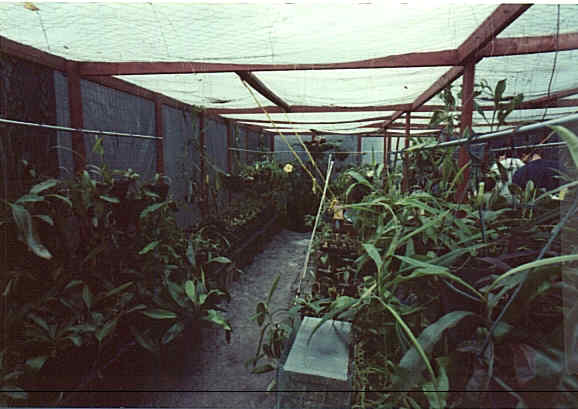
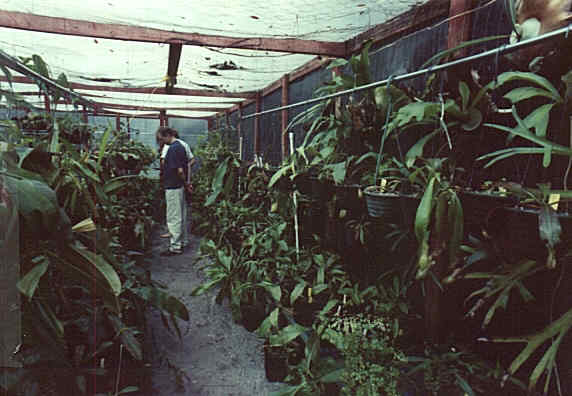
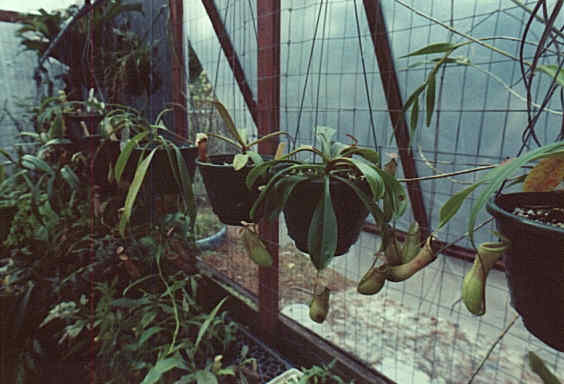
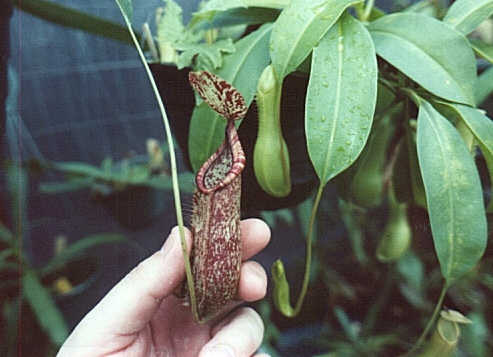
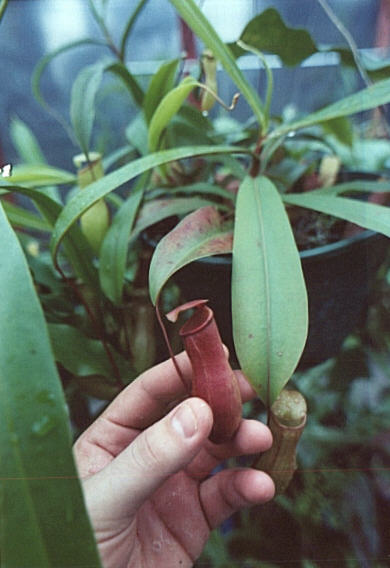
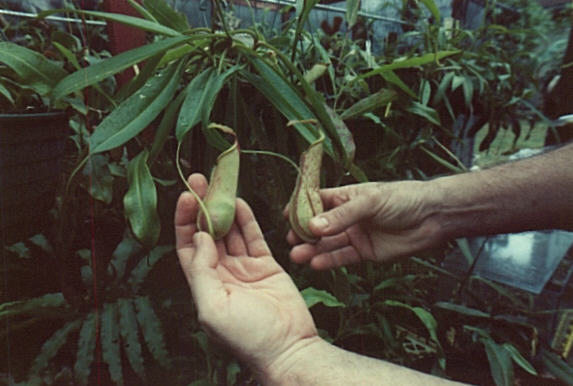
The pictures below are from Bruce Bednar's Greenhouse, at Lee's Botanical Gardens in Labelle, Florida. Thanks Mark Pogany for the pictures! After those three, I have several Nepenthes I don't know the names of, so I couldn't stick them under Highland, Lowland. So if you know which is which, Email me!!!

Last update 04/13/00
Since 2/22/2000