The Australian Pitcher Plants

|
|
|
|
* Not very difficult to find from suppliers, but it is a little expensive
* Good for the
intermediate collector
* Grown easily in a small terrarium, but the flower stalk may be a problem
* No dormancy required
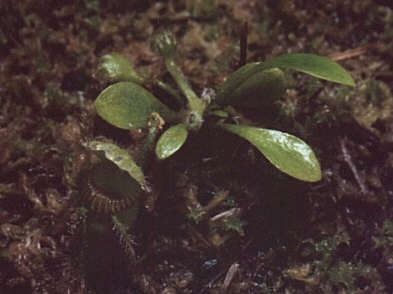
Cephalotus belongs to the family Cephalotaceae. This is a nice plant, and is sought after by many collectors regardless of it's small size at maturity. The Cephalotus grows slowly, which accounts for the high prices found from suppliers (It can take a few years to have a mature plant). The plant grows underground rhizomes which allows it to die back in cold weather. It puts out two types of leaves, unlike many other carnivorous plants. The first leaves come in the spring and they are not carnivorous; these green oval leaves are believed to help the plant in photosynthesis. A little later, leaf stems emerge from the plant with a fuzzy knob at the end, which later develop into a trap.
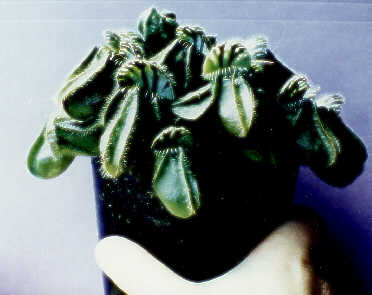
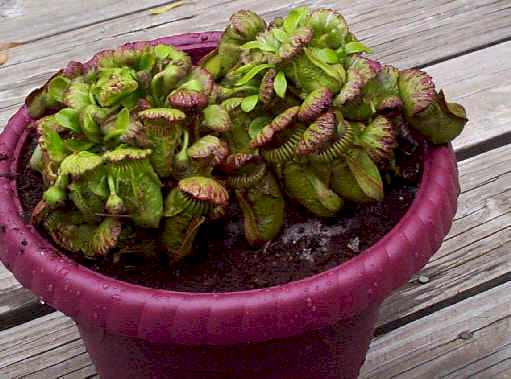
I mentioned earlier that it is a small plant -- I wasn't kidding. When you see the first trap and notice it is smaller than a kernel of corn, you will ask yourself, "Is that it"? Allow me to be the first to respond, "Yes. That's It." The small pitchers, only averaging one inch in height AT MATURITY, are brownish and covered in hairs. There are a few people selling the Giant Variety, which I assume is the picture above on the right. The hood covers the pitchers, and may close in extreme heat to preserve the fluids in the traps. These plants are best grown in full sun, which will allow red and maroon coloration in the pitchers. They can grow in low lights, just don't expect the same coloration.
Flowers appear in the mid-summer, and are not too attractive. The stalk can average 2 feet in length, and can topple over and grow along the ground. Flowers are small and green.
I got 5 from Dean Cook in early July 1999, they were small (almost seedlings?), but they are all potted up. As of August, all of them are showing new leaves, while two of them had 3 new leaves, no traps yet. In September, one died, from over watering I can bet. In December, I still have four, and moved 2 outdoors. I found they grow faster and healthier under strong light.
Growing Media:
I used a mixture consisting of 1 part peat moss and 2 parts sand which is very similar to the swampy lands they are native to. They are susceptible to root rot, so grow in pots with drainage holes, and add water only when it dries out from the water tray.
Temperatures:
Will grow at indoor temperatures year-round at 70-85F. If grown outdoors, they should be able to tolerate up to 95F, and can survive light frost in the winter (38-40).
Water & Humidity:
Keep wet and humid, much like other CP's. If you have light winters and don't expect it to freeze, then let them dry out a little for dormancy.
Light:
In full sun, the traps are smaller but have red coloration. Those grown indoors or in shade will have larger traps, but no vivid coloration. It seems to like it under the Metal Halide a lot more than a florescent.
Asexual Reproduction:
Sexual Reproduction:
I don't have experience here, but when the flowers are open, the plants must be cross-pollinated. Brush the pistils and stamens of the flowers every day so as long the flower is open. It is best to stratify the seed for 2 months, but it isn't needed. Seeds don't keep very long. This method is a VERY slow way to grow them.
Pest & Disease Problems:

Last update 07/30/01
Since 2/22/2000